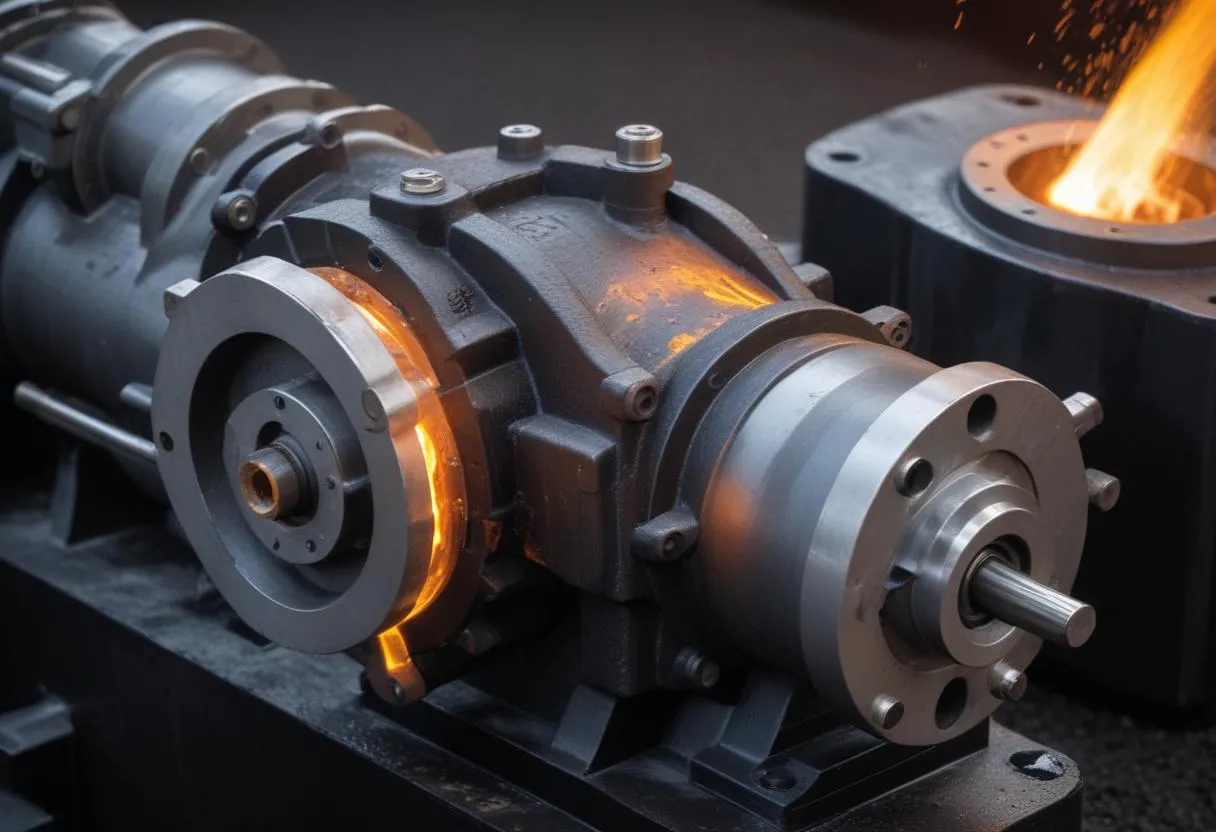
 Asphalt and bitumen are highly viscous materials commonly used in road construction and infrastructure. To handle these materials, specialized pumps are required that can effectively deal with their viscous nature and high temperatures. The optimal pump types for these purposes are gear pumps, screw pumps, and lobe pumps.
Gear pumps are frequently chosen for their efficiency in creating a smooth, pulsation-free flow and operating at consistent pressure levels, essential for maintaining the integrity of the material. They work by using interlocking gears to pump the bitumen or asphalt through the system. This setup is particularly effective for materials that require precise temperature management to remain fluid.
Screw pumps, on the other hand, are distinguished by their ability to handle large capacities. These pumps use one or more screws that, when rotated, move the viscous asphalt along the pump’s chamber. Screw pumps are particularly valued for their durability and minimal wear, due to few contacting parts, making them suitable for handling abrasive materials like asphalt.
Lobe pumps are similar to gear pumps in operation but use lobed rotors instead of gears to move the asphalt. This type of pump is well-suited to handling high-viscosity fluids and offers excellent sanitary qualities, although this is less of a concern in asphalt and bitumen applications.
| Pump Type | Key Advantages | Common Applications |
|---|---|---|
| Gear Pumps | Smooth flow, high pressure, temperature control | Road paving, roof tiling |
| Screw Pumps | High capacity, durability, minimal wear | Heavy-duty road construction |
| Lobe Pumps | Handle high viscosity, low shear, and pulsation-free operation | Industrial & commercial infrastructure |
For selecting the right pump, consider the following criteria:
- Material Viscosity: Ensure the pump can handle the specific viscosity of the material at operating temperatures.
- Temperature Control: The ability to maintain material temperature is critical to avoid solidification, which can damage the pump.
- Flow Rate Requirements: Different projects require different flow rates, influencing the choice of pump capacity.
- Maintainability: Pumps should be easy to maintain given the abrasive nature of asphalt and bitumen.
By considering these aspects and choosing the appropriate pump type, operators can ensure effective and efficient handling of asphalt and bitumen, reducing downtime and maintenance costs.
Maintenance practices for asphalt pump longevity
Regular maintenance is crucial for ensuring the longevity and efficiency of asphalt pumps used in the tough conditions of bitumen and asphalt transfer. Given the high temperatures and abrasive nature of these materials, a robust maintenance schedule can prevent frequent breakdowns and extend the service life of the equipment.
Inspection and Cleaning: Regular inspections are essential. Operators should look for signs of wear and tear, focusing on potential leaks, seal integrity, and the condition of the rotors and gears. It is also vital to periodically clean all accessible parts of the pump to prevent bitumen or asphalt buildup, which can harden and obstruct the flow, leading to increased pressure on the pump mechanisms.
Lubrication: Proper lubrication cannot be overstated, particularly for gear and lobe pumps which rely on smooth interfacing of moving parts. Choosing high-quality lubricants that can withstand high temperatures significantly enhances pump performance and life span. This should be done according to the manufacturer’s guidelines or even more frequently, depending on usage intensity.
Temperature Management: Since asphalt and bitumen need to stay within certain temperature thresholds to maintain viscosity, monitoring and managing pump temperature is crucial. Overheating can quickly lead to equipment failure, so ensuring adequate cooling systems are in place and functioning correctly is necessary.
Replacement of Worn Parts: Components such as seals, gaskets, and rotors can degrade over time due to the corrosive nature of bitumen and asphalt. Developing a schedule for checking and replacing these parts before they fail is vital. Use only high-quality replacements to ensure compatibility and durability.
System Calibration: Ensuring that all parts of the pumping system are correctly calibrated, including pressure settings and flow meters, helps in maintaining an optimum operation that safeguards the pump and the quality of the asphalt or bitumen.
Quality Assurance and Record-Keeping: Implementing a thorough record-keeping system will track performance issues, schedule preventive maintenance, and log repairs which helps in identifying recurring problems and assessing overall pump health over time.
| Maintenance Task | Frequency | Importance |
|---|---|---|
| Inspection & Cleaning | Weekly/After every use | Prevents clogs and detects early signs of damage |
| Lubrication | As per manufacturer’s recommendation or per usage | Reduces wear and tear on moving parts |
| Part Replacement (seals, gaskets) | Annually or bi-annually | Prevents leaks and mechanical failures |
| Temperature Monitoring | Continuous/Operational | Prevents overheating and material degeneration |
| System Calibration | Bi-annually | Ensures operational efficiency and accuracy |
Adhering to these maintenance practices can significantly influence the operational lifespan and efficacy of pumps in the challenging process of asphalt and bitumen transfer. Proper maintenance not only minimizes the downtime but also retains the product quality throughout the transfer process.
Case studies on efficient bitumen transfer
This section highlights three case studies on efficient bitumen transfer across different geographical locations and operational scales. These studies provide insights into how various types of pumps and handling strategies contribute to optimal results.
Case Study 1: Highway Construction in Alberta, Canada
In the cold climate of Alberta, maintaining the bitumen’s viscosity during transfer is critical due to the low ambient temperatures. Gear pumps were selected for their ability to handle heavy and viscous materials at controlled temperatures. The installation of these pumps enabled a consistent flow of bitumen, essential for continuous asphalt production and effective paving operations. The project team managed to reduce unnecessary downtime by 20% and improved the overall speed of construction due to the high efficiency of the pumping system.
Case Study 2: Industrial Roofing in Florida, USA
In contrast, Florida’s challenging hot and humid climate demands different handling characteristics. For this scenario, screw pumps were employed for their durability and high capacity, ideal for the large-scale production demands of industrial roofing. By integrating screw pumps, the plant achieved a 30% increase in throughput. The minimal wear and tear on the pump parts also led to a significant reduction in maintenance costs, boosting operational profitability.
Case Study 3: Road Repair Operations in rural India
With limited access to high-end technology, the project in rural India utilized lobe pumps for bitumen transfer in road repair operations. Lobe pumps were chosen for their ability to handle high-viscosity fluids without degradation, crucial in areas where pump maintenance resources are scarce. This selection enabled local crews to enhance road repair speed by 50% while ensuring the consistent quality of the laid asphalt.
- Location and Climate Considerations: The selection of pumps adapted to local climate conditions, like in Alberta and Florida, showcases the critical need for climate-responsive engineering.
- Technological Adaptation: In India, the use of simpler, robust technology like lobe pumps indicates the importance of adaptability in technology transfer for developing regions.
- Operational Efficiency: Each case demonstrates a significant boost in operational efficiency and project outcomes, directly attributed to the choice of appropriate pump technology.
These case studies illustrate that selecting the right type of asphalt pump, tailored to specific environmental and operational requirements, is vital for enhancing efficiency and productivity in bitumen transfer projects.